
Food Packaging Challenges and How We Are Innovating?
Food packaging doesn’t just carry a product. It carries expectations of freshness, safety, sustainability, and design. One weak fold or poorly chosen material can undermine the entire customer experience.
The challenges in this industry aren’t theoretical. They show up in broken seals, inflated costs, and quiet complaints from people who no longer reorder. At Art Impact Packaging, we’ve spent over 20 years listening to those complaints and working behind the scenes to design packaging that actually works, across fast food counters, refrigerated shelves, e-commerce deliveries, and everything in between.
Smart Food Packaging Solutions for Modern Businesses
Here’s a closer look at the key food packaging challenges brands are facing today, and the quiet ways we’re solving them.
1. Meeting sustainability demands without compromising performance
Sustainability used to be a nice-to-have. Now it’s expected, by customers, regulators, and even your own team. The challenge? Making packaging that’s eco friendly and still holds up to heat, weight, moisture, and movement.
It’s a constant balance. Too much material, and you’re wasting resources. Too little, and your packaging fails.
We work with materials like natural brown kraft to produce durable yet recyclable formats. Our food-grade Kraft boxes, pizza boxes, and burger boxes are designed to reduce environmental impact without sacrificing structure. And for lighter items, pillow boxes and tulip boxes offer foldable, low-waste formats that still feel premium.
2. Protecting food throughout the supply chain
Food is fragile, not just in the kitchen, but across storage, transport, and delivery. Without the right protection, products dry out, break down, or arrive looking like they’ve been through more than a van ride.
This is where structural design matters. At Art Impact Packaging, we engineer food packaging boxes to account for real-world handling. That means durable corners, reinforced seams, and lids that don’t loosen mid-journey.
Whether it’s tuck boxes for baked goods or custom-fit cardboard boxes for multi-item kits, we prioritise packaging that shields the product without smothering it.
3. Designing packaging that reflects your brand identity
A product might taste great, but if the packaging doesn’t reflect that, many customers will walk past it on the shelf.
Too often, we see brilliant brands let down by weak food packaging design. Logos crammed into corners, poor colour reproduction, and off-the-shelf box shapes that don’t match the tone of the product.
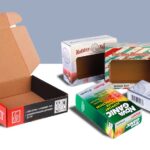
At Art Impact Packaging, we design with brand in mind, not just printing your identity on a box, but building it into the form itself. For countertop visibility, our display boxes help grab attention. For premium products like chocolates or artisanal snacks, magnetic closure boxes add a tactile moment of pause that stays with the buyer. Your packaging should simply tell the story before the first bite.
4. Avoiding confusion in product recognition and brand recall
When packaging looks too much like everything else, you lose your edge. A common challenge in the food industry is the lack of distinctiveness. Food packaging companies often default to the same few shapes and colours, which can make it hard for customers to spot your product, especially in busy retail environments.
We help clients avoid this with subtle structural changes and thoughtful finishes. Even something as simple as a modified tuck flap or a die-cut window can change how your customised food packaging feels in the hand, and how easily it’s recognised again.
5. Adapting packaging for new e-commerce demands
Food delivery isn’t new. But it’s no longer just about takeaways. Meal kits, gifting, and shelf-stable products have all become ecommerce-ready, and that’s changed what packaging needs to do.
Boxes now face long trips, multiple carriers, and temperature shifts. If they collapse, leak, or fail to protect the presentation, your reputation takes the hit.
That’s why our gable boxes and reinforced kraft boxes are built with e-commerce in mind. They fold flat for storage, survive transit, and still open cleanly for the customer. Because the first impression often starts with the box on the doorstep.
6. Preserving freshness without chemical overkill
Long shelf life isn’t always about preservatives. It’s about packaging that breathes when it needs to, and seals tight when it doesn’t.
Freshness is one of the most sensitive challenges in food packaging, especially for short-life products like baked goods, deli items, or grab-and-go snacks. A few hours too long in the wrong container can lead to sogginess or spoilage.
We design boxes like dispenser boxes that regulate airflow while maintaining structure. And when visibility matters, we can incorporate viewing panels that don’t compromise freshness, ideal for impulse items at the point of sale.
7. Creating packaging that performs at the point of sale
Customers make split-second decisions in shops. If your packaging doesn’t grab attention or communicate quickly, it’s probably working against you.
Beyond branding, takeaway food packaging needs to be easy to handle, resealable if possible, and readable without confusion. Hard-to-open flaps, messy printing, and vague labelling all hurt the customer experience.
We work with clients to improve usability. Whether it’s sleeve box formats for grab-and-go meals or clearly labelled display boxes, we aim for packaging that speaks clearly, both visually and functionally.
8. Managing packaging costs in a volatile materials market
Paperboard prices have seen sharp swings in recent years. That leaves many brands stuck choosing between absorbing the cost and downgrading their packaging.
At Art Impact Packaging, we’ve built cost flexibility into our system through smarter batch runs, layout planning, and reusing common structures. This lets us offer custom food packaging without needing to reinvent the box every time.
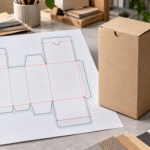
Our cardboard boxes, for instance, are designed with modularity in mind. One die-line can support multiple SKUs, making it easier to manage costs across a product range.
Quiet work of solving food packaging challenges
These challenges aren’t new, but they keep evolving. What worked five years ago might not work today, and what works now needs to be tested against what’s next.
At Art Impact Packaging, we see packaging as a quiet craft. It’s not about shouting for attention. It’s about noticing the folds that fail, the colours that fade, the lids that lift when they shouldn’t, and doing something about it.
We don’t offer one-size-fits-all answers. We offer food packaging that fits your actual needs. And that, in this industry, still goes a long way.