
Mailer Boxes vs Shipping Boxes: What’s the Difference?
A surprising number of UK brands use these terms interchangeably: mailer boxes, shipping boxes, and postal boxes, assuming they all do the same thing. But if you’ve ever had a box arrive dented, or paid too much for postage, you’ll know the difference matters.
When clients come to Art Impact Packaging looking to improve their delivery experience, one of the first things we talk about is choosing the right box type. And more often than not, it starts with this question: mailer boxes vs shipping boxes, which one’s actually right for your product?
If you’re asking the same, let’s walk through it. Or if you’d rather talk it through, call us on +44 7435 789442 or contact us now.
Structural and functional differences
Understanding the real difference between mailer boxes and shipping boxes is essential when selecting the right packaging for your e-commerce deliveries. While many UK businesses use the terms interchangeably, the packaging choice you make can significantly affect cost, protection, presentation, and even customer satisfaction.
What are mailer boxes?
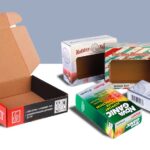
Mailer boxes are designed primarily for presentation and branding. Commonly used in direct-to-consumer (DTC) deliveries, they often feature folding flaps, tuck-in lids, and a sleek exterior ideal for custom printing. These boxes typically arrive flat and can be easily assembled into a secure, attractive package.
What are shipping boxes?
Shipping boxes, also known as regular slotted cartons (RSCs), prioritise durability and protection over design. They come in standard rectangular formats, require tape to seal, and are built to survive rougher handling and longer transit routes, making them ideal for wholesale or fragile shipments.
Mailer boxes vs shipping boxes comparison
Here’s a side-by-side breakdown to help you understand the key differences:
Feature | Mailer Boxes | Shipping Boxes |
Primary Use | Direct-to-consumer (DTC) deliveries, presentation-focused | Bulk shipments, fragile or heavy items |
Structure | Die-cut, self-locking flaps fold into shape | A regular slotted carton (RSC) requires tape to seal |
Material | E-flute or B-flute corrugated board | Typically, thicker corrugated board |
Aesthetic Appeal | High – ideal for branding, unboxing experience | Low – plain appearance, prioritises protection |
Ease of Assembly | Quick and tool-free assembly | Requires taping and folding |
Protection Level | Moderate – suitable for lightweight to medium-weight products | High – ideal for fragile or multiple items |
Common Products Shipped | Subscription boxes, fashion, beauty items, books, stationery | Electronics, kitchenware, books in bulk, warehouse supplies |
Recyclability | High – minimal tape, often uses water-based inks | High – though uses more materials like void fill and plastic tape |
Storage Efficiency (Flat-packed) | Excellent – arrives flat, space-saving | Good – arrives flat but has a larger footprint when assembled |
Cost Per Unit | Slightly higher – but often saves cost on inner packaging | Lower per unit – but may need additional internal packaging |
When should you choose a mailer box
If your product is going directly to a customer’s door, and first impressions matter, a corrugated mailer box UK is usually a smart choice. These boxes offer a clean unboxing experience and are easy to open, without scissors or knives.
For smaller, lightweight items that don’t need extra padding, mailers strike a balance between looks and strength. They’re also surprisingly durable. Many are made with E-flute or B-flute corrugated board, which holds up well in the post. Our Mailer Boxes can also be customised with eco inks, tear strips, or reinforced sides, depending on what you’re shipping.
They’re ideal for:
- Subscription boxes
- Boutique clothing
- Stationery and print goods
- Beauty items
- Welcome kits
In short, if your product is light to medium weight, and presentation matters as much as protection, mailers do the job well.
When a shipping box makes more sense
There are times when appearance comes second. Maybe your product is fragile. Maybe it’s large. Or maybe it’s being shipped in bulk or over a longer distance. That’s where recyclable shipping boxes UK step in.
Shipping boxes are made for protection, typically using thicker corrugated board and sealed with tape. They don’t open like a gift box. They open like a package that’s been through something and kept everything inside safe.
If you’re sending electronics, books in bulk, kitchenware, or multiple units at once, a plain shipping box is usually your safest bet. They’re also easier to palletise and stack for storage or courier pickup.
Our Cardboard Boxes and Corrugated Boxes offer options in various wall strengths and board grades. Some clients use them as outer packaging, pairing them with inner mailer boxes for branded delivery inside and transit protection outside.
Which one is more sustainable?
More brands are thinking about this now, and rightly so. Eco mailer packaging UK has become more accessible, especially as demand has grown. Most mailer boxes can now be produced with recycled board and printed with water-based inks. They also use less tape and are easier to recycle because of their simple folding design.
Shipping boxes are usually recyclable too, but they tend to involve more materials, tape, void fill, and labels, which customers often don’t dispose of properly. That said, a well-sized shipping box with minimal plastic is still far better than a padded envelope with bubble wrap.
If you’re trying to reduce your footprint, it’s not about avoiding one type over the other. It’s about choosing the right size, board grade, and material. And communicating that clearly to your customers.
Some of our clients even include a line on their boxes that reads: “This box is 100% recyclable, please fold flat and recycle locally.” It costs nothing to print and tells the customer that you’ve thought it through.
Comparing postal boxes in the UK: what to look for
In a market filled with options, a postal box comparison UK often comes down to four things: strength, appearance, cost, and storage.
Strength is obvious; your product has to survive the journey. For that, corrugated board still leads the way. Whether it’s a mailer or shipping box, look for board types like E-flute or B-flute, which offer durability without bulk.
Appearance depends on your brand. Gift Boxes and Sleeve Boxes offer more premium unboxing, but aren’t built for rough courier handling. Tuck Boxes and Mailer Boxes offer a blend of both.
Cost will vary depending on size, print type, and order volume. Mailers tend to be more expensive per unit than plain shippers, but often save money on inner packaging, since they’re self-contained.
And storage, it’s often overlooked. Mailer boxes arrive flat and stack easily. Shipping boxes do too, but take up more room once assembled. If you’ve got limited warehouse space, mailers might be more practical.
How to Choose Between Mailer and Shipping Boxes for Your Business
There’s no one-size-fits-all answer. Your ideal packaging depends on your product type, shipping method, customer experience, and brand values.
- Sending a luxury gift or DTC product? A mailer box offers a premium impression.
- Shipping multiple fragile items or managing wholesale logistics? A shipping box offers the durability you need.
At Art Impact Packaging, we help UK businesses balance functionality, sustainability, and branding. Whether you need eco mailers, custom shippers, or advice on the right packaging strategy, we’re here to help.
FAQ's

No. Mailer boxes are designed for direct-to-consumer use and often feature folding lids and branding. Shipping boxes are bulkier, plain, and made for transit protection.
Plain shipping boxes are usually cheaper per unit, but mailer boxes can reduce the need for inner packaging and make a better impression on arrival.
Yes. Most mailer and shipping boxes made from corrugated board are fully recyclable, provided you avoid plastic coatings or non-recyclable labels.
For small to mid-sized products, branded mailer boxes are ideal. For bulk or fragile goods, shipping boxes offer more protection.