Box Dimensions: How to Measure Length, Width and Height
Quick Answer
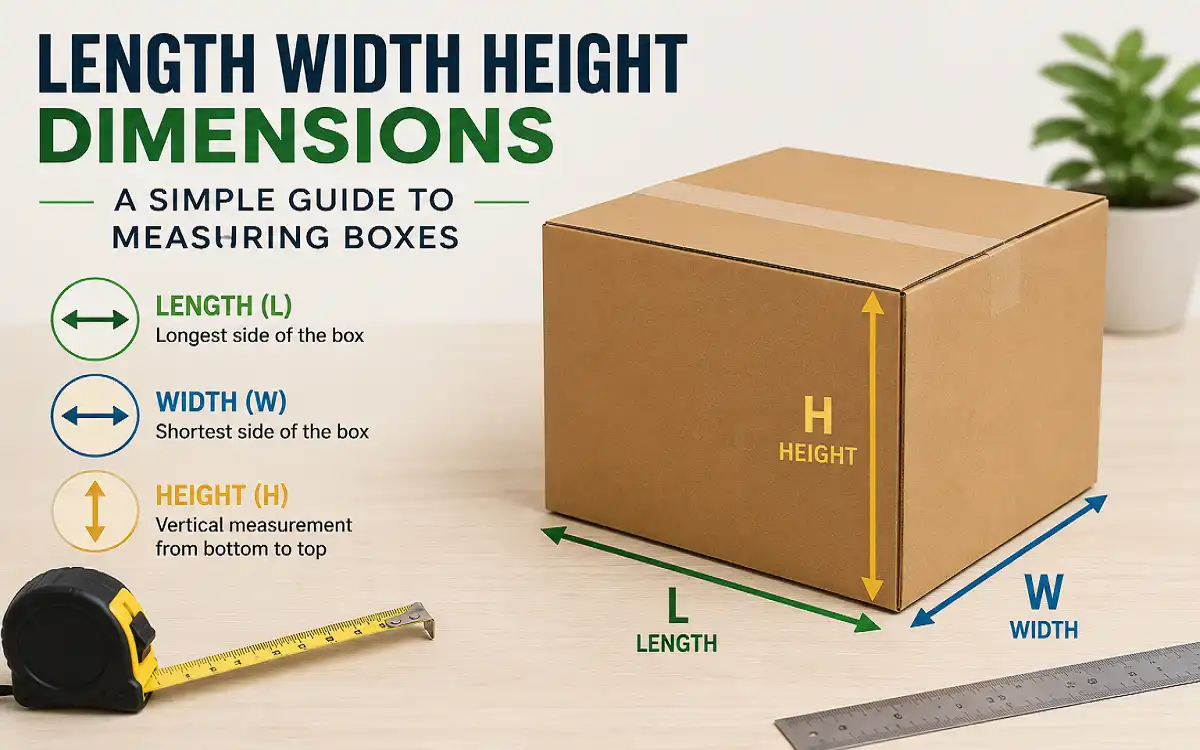
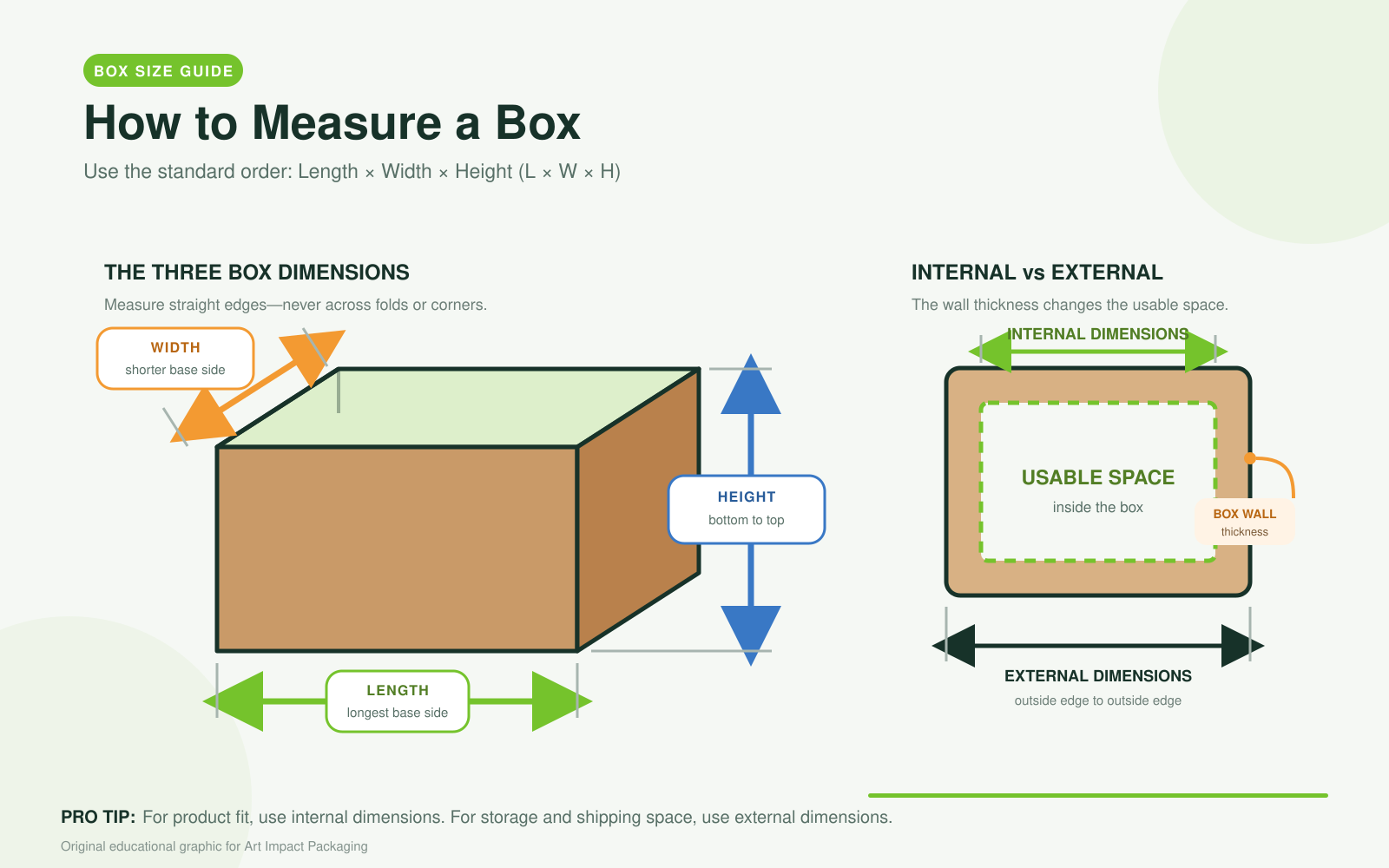
Box dimensions are written as Length × Width × Height (L × W × H). Measure the longest side of the base for length, the shorter side for width, and the vertical side from bottom to top for height. Use internal dimensions for product fit and external dimensions for shipping.
Measuring a box may seem simple, but many packaging mistakes begin with incorrect measurements. The three main measurements are length width and height. These numbers tell your packaging supplier how big the box should be. They also help you choose a box that fits your product the right way.
This guide explains the length, width, and height of a box, the standard order of box dimensions, and how to measure a box correctly. The same method applies to most boxes, bags, and other packaging formats.
What Do Length Width and Height Mean?
Every box has three main measurements.
These are:
Length
Width
Height
Packaging manufacturers use these dimensions to produce boxes, while shipping carriers use them to determine package size. Once you understand these terms, ordering the correct box becomes much easier.
Length
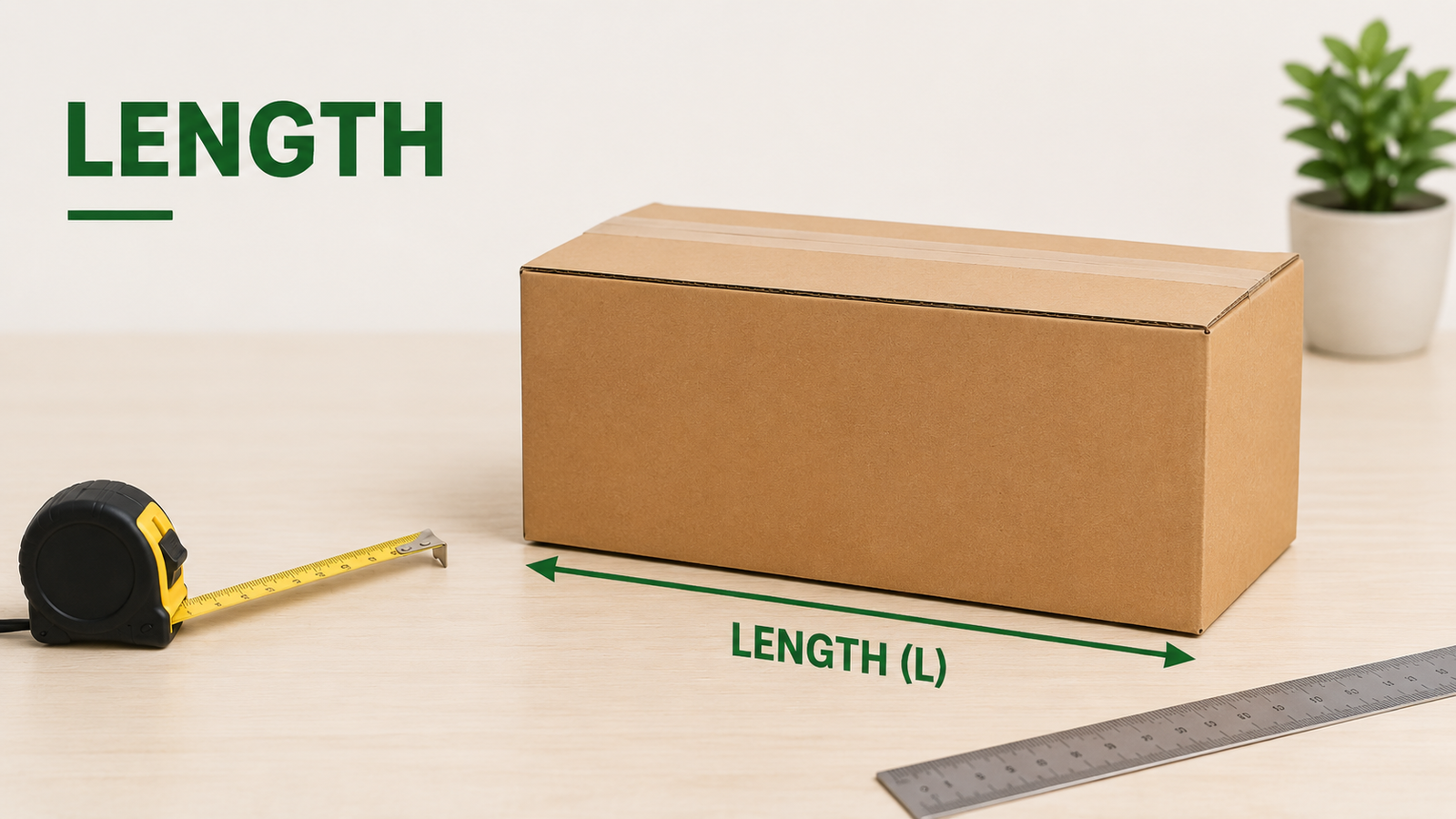
Length is the longest side of the bottom of the box. Place the box on a flat surface. Look at the base. The longer side is the length.
For example if the bottom of a box is 14 inches by 10 inches then the 14 inch side is the length.
Width
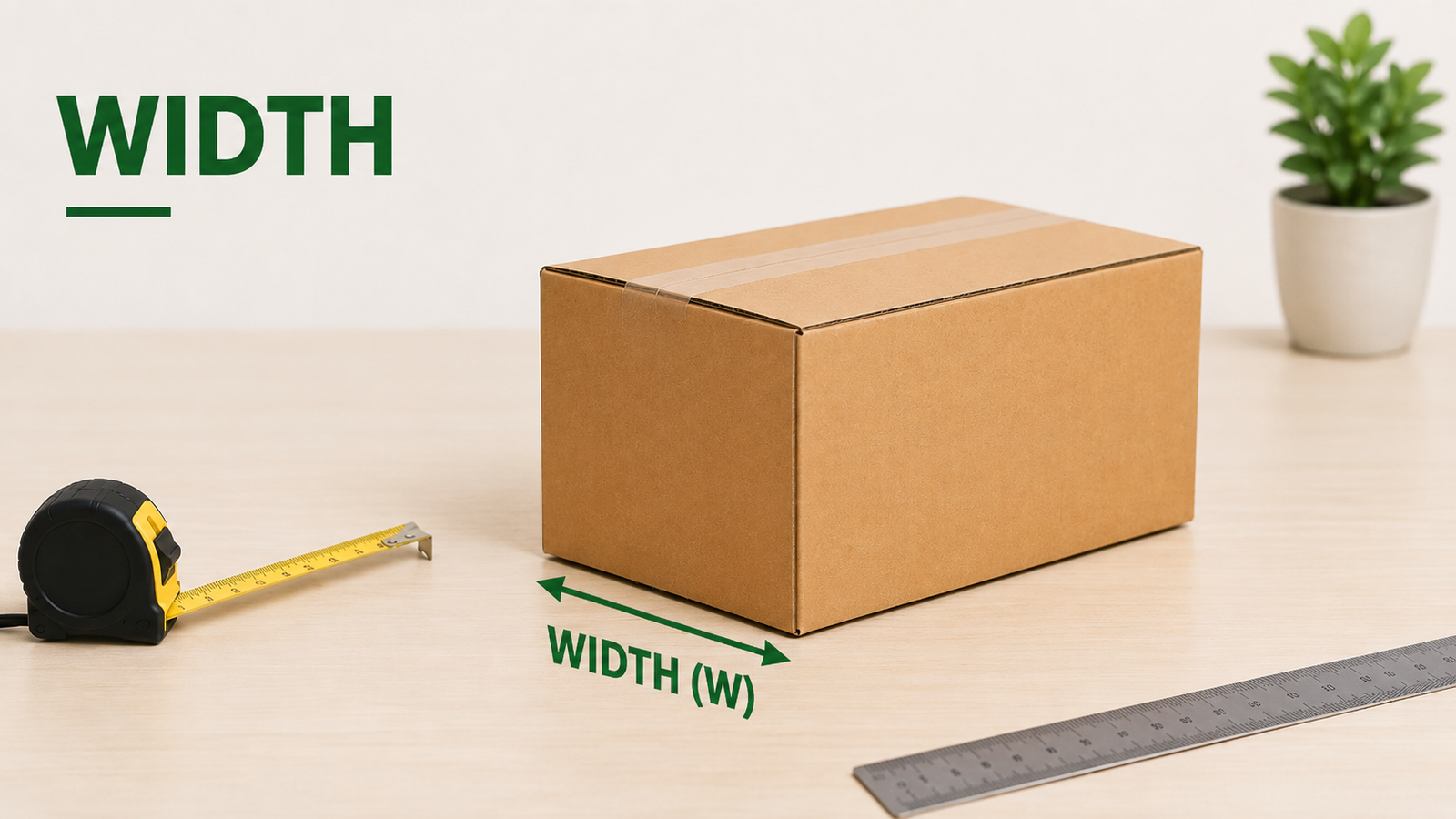
Width is the shorter side of the box base and runs across the length. For most rectangular boxes, length refers to the longer base side, while width refers to the shorter one.
How to Find the Height of a Box
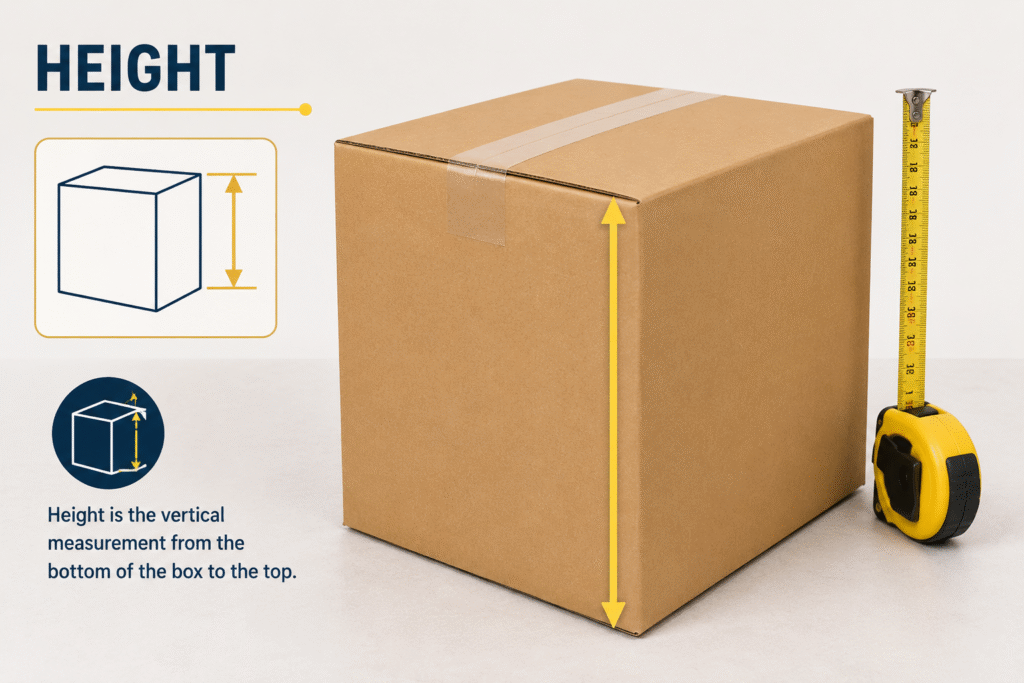
Height means how tall the box is. It is measured from the bottom of the box to the top.
For example a mailer box may be:
Length: 12 inches
Width: 8 inches
Height: 4 inches
This box size would be written as:
12 × 8 × 4 inches
That means the box is 12 inches long. It is 8 inches wide. It is 4 inches tall.
Correct Order of Box Dimensions
Is it Height Width Length Order or Height Length Width Order? The standard order for box dimensions is:
Length × Width × Height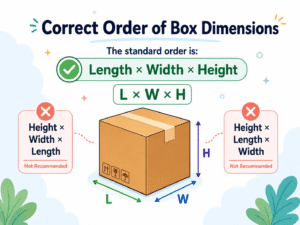
This is also written as:
L × W × H
For example:
16 × 12 × 8 inches
This means:
Length: 16 inches
Width: 12 inches
Height: 8 inches
This is the most common order used in packaging. Some suppliers may use a different order. That is why it is better to label each measurement.
Instead of writing only:
16 × 12 × 8 inches
Write it like this:
Length: 16 inches
Width: 12 inches
Height: 8 inches
This makes the size clear for your supplier.
Length vs Width
Length and width are both measured across the bottom of the box.
The easiest way to remember it is this:
- Length is the longer side of the base.
- Width is the shorter side of the base.
For most rectangle boxes this rule works well. If the base is 18 inches by 10 inches then the 18 inch side is the length. The 10 inch side is the width.
Width vs Height
- Width and height are not the same.
- Width goes across the bottom of the box.
- Height goes from the bottom to the top.
- Width is flat. Height goes upward.
- If these two numbers are switched then the box may be made in the wrong shape.
Height vs Length
- Height and length also measure different directions.
- Length runs along the bottom of the box.
- Height goes upward.
Keep the box in its normal standing position. This makes it easier to see which side is length and which side is height.
What Does LxWxH Mean?
LxWxH is short for Length × Width × Height. Packaging companies use this short form when writing box dimensions.
For example:
LxWxH = 12 × 8 × 4 inches
Length = 12 inches
Width = 8 inches
Height = 4 inches
You may also see LWH on product drawings and shipping documents. Both formats describe the same three measurements.
Is Length the Same as Width?
Many people confuse length with width, but they are not the same. Length is usually the longest side of the box base, while width is the shorter side. Both measurements are important because they help create the correct box size.
Other Dimension Orders You May See
Most packaging uses length × width × height. Still you may see other orders in product listings drawings or supplier files.
Some examples are:
Height × Width × Length
Height × Length × Width
Length × Height × Width
This can happen when a box is tall or shown upright. The measurements do not change. Only the order changes. The safest method is to label each one clearly.
For example:
Length: 14 inches
Width: 10 inches
Height: 6 inches
This is much clearer than writing only:
14 × 10 × 6 inches
Why Box Dimensions Matter
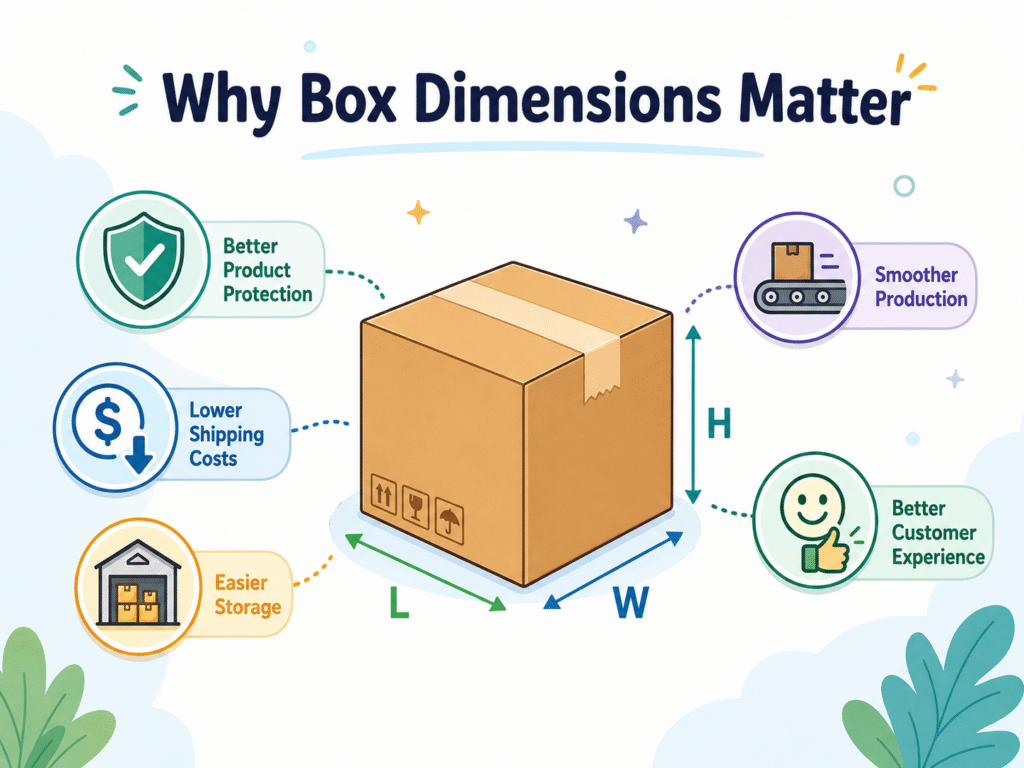
Accurate box dimensions help protect products, control shipping costs, simplify storage, and create a better unboxing experience.
Better Product Protection
A box should hold the product safely. If there is too much empty space inside then the product can move during shipping. It may hit the sides of the box. It may even break. If the box is too tight then the product may get squeezed. This can damage the product or the label.
A good box gives the product enough space to fit safely. It also leaves room for paper foam inserts or dividers if needed.
Lower Shipping Costs
Shipping costs are often influenced by package dimensions. Oversized boxes take up more space in trucks and warehouses, which can increase costs even when the product is lightweight. Choosing the correct length, width, and height reduces empty space and may lower shipping expenses.
Easier Storage
Boxes with the right size are easier to stack. They take less space in storage rooms warehouses and retail shelves. This makes inventory easier to manage. It also helps the packing team work faster.
Smoother Production
Custom box makers need clear measurements. If the size is wrong then the box may not close well. The product may not fit. The design may also look wrong after printing. Wrong measurements can delay production. They can also waste material. Clear measurements help avoid these problems.
Better Customer Experience
Customers notice packaging. A box that fits well feels more professional. It opens better. It keeps the product in place. It also lowers the chance of damage during delivery. Good packaging starts with the right size.
How to Measure a Rectangular Box Step by Step
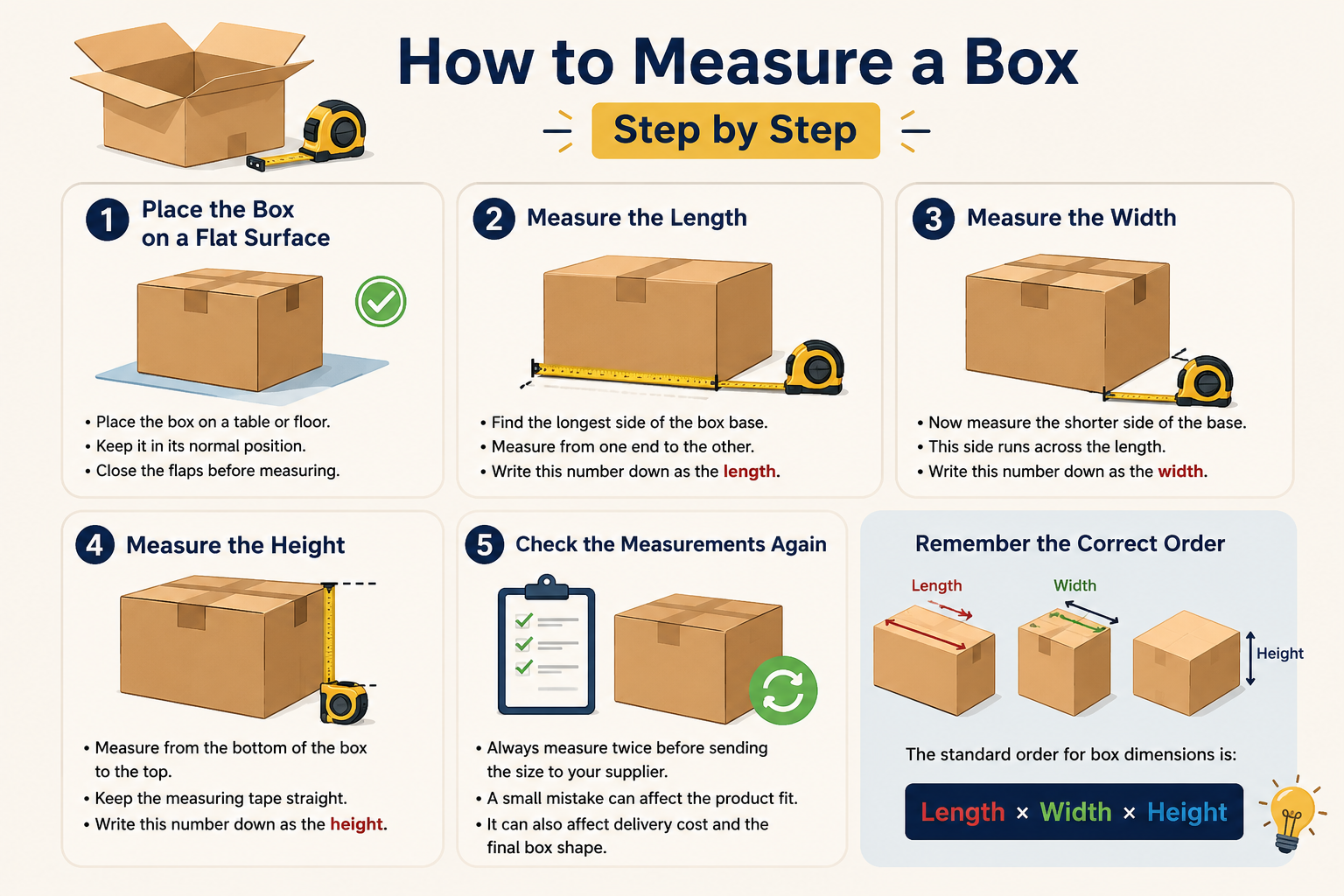
You do not need special tools to measure a box. A ruler or measuring tape is enough.
Follow these steps.
Step 1. Place the Box on a Flat Surface
- Place the box on a table or floor.
- Keep it in its normal position.
- Close the flaps before measuring.
This gives you a more accurate size.
Step 2. Measure the Length
- Find the longest side of the box base.
- Measure from one end to the other.
- Write this number down as the length.
Step 3. Measure the Width
- Now measure the shorter side of the base.
- This side runs across the length.
- Write this number down as the width.
Step 4. Measure the Height
- Measure from the bottom of the box to the top.
- Keep the measuring tape straight.
- Write this number down as the height.
Step 5. Check the Measurements Again
- Always measure twice before sending the size to your supplier.
- A small mistake can affect the product fit.
- It can also affect delivery cost and the final box shape.
Simple Measuring Tips
- Measure the box in its normal standing position.
- Use the same unit for all measurements.
- Do not mix inches and centimeters.
- Write the size in length × width × height order.
- Label each measurement.
- Measure twice before placing a custom packaging order.
- Leave extra space if the product needs paper foam inserts dividers or wrapping.
Internal vs External Box Dimensions
When ordering custom packaging, confirm whether your supplier needs internal or external dimensions. Internal measurements describe the usable space inside the box, while external measurements describe its total outside size.
What Are Internal Dimensions?
Internal dimensions measure the usable space inside the box. These measurements tell you how much room your product will have after the box is assembled.
If your product measures 8 × 6 × 3 inches the internal dimensions of the box should be slightly larger. This gives enough room for the product to fit without being too tight.
Internal dimensions are the most important measurements when ordering custom packaging because they determine how well the product fits inside the box.
Internal dimensions are useful for
- Product fitting
- Custom inserts
- Foam packaging
- Dividers
- Protective trays
What Are External Dimensions?
External dimensions measure the outside size of the finished box. These measurements include the box walls and board thickness.
Shipping companies often use external dimensions to calculate shipping costs because they measure the total space the package takes during transport.
External dimensions are also useful for warehouse storage pallet planning and shelf organization.
External dimensions are commonly used for
- Shipping
- Storage
- Warehouse planning
- Delivery calculations
| Internal Dimensions | External Dimensions |
| Measure usable space inside the box | Measure the outside size of the box |
| Best for product fitting | Best for shipping calculations |
| Used by packaging manufacturers | Used by shipping carriers |
| Do not include board thickness | Include board thickness |
Which One Should You Use?
If you are ordering custom packaging always ask your supplier whether they need internal or external dimensions. Most packaging manufacturers prefer internal measurements because they help create a snug fit for your product.
Product Based Dimension Examples
Different products need different box sizes. Here are a few common examples.
Cosmetic Boxes
Cosmetics should fit snugly inside the box. A tight fit keeps the product secure and gives customers a premium unboxing experience.
Candle and Electronics Boxes
Candles glass jars and electronic products often need extra protection. Leave enough space for foam inserts dividers or cushioning materials to reduce the risk of damage.
Apparel and Food Packaging
Clothing boxes need enough room to fold garments without creating wrinkles. Food packaging should have enough space for safe sealing and stacking during shipping.
How to Calculate Box Volume
Knowing the volume of a box helps you plan packaging storage and shipping more accurately.
The formula is simple.
Volume = Length × Width × Height
For example imagine your box measures:
- Length = 12 inches
- Width = 8 inches
- Height = 4 inches
The calculation will be:
12 × 8 × 4 = 384 cubic inches
This means the box has a total volume of 384 cubic inches.
You can also use centimeters if you measure your box in metric units. Just use the same unit for every measurement.
Why Box Volume Matters
Calculating box volume helps you
- Compare different box sizes
- Plan warehouse storage
- Estimate shipping space
- Choose the right carton size
- Reduce wasted packaging material
A box with the correct volume protects the product better and helps lower transportation costs.
How Box Dimensions Affect Shipping Cost
Many people think shipping cost depends only on weight. That is not always true.
Most shipping companies also look at the size of the package. Large boxes take more space inside delivery trucks even if they are light.
This is called dimensional weight.
If your box is much bigger than your product you may pay more even though the product weighs very little.
For example a small candle packed inside a very large box may cost more to ship than the same candle packed inside a properly sized box.
Choosing the correct length width height box helps reduce empty space and lowers shipping charges.
It also reduces the amount of filler material needed inside the package.
Right size packaging helps you
- Lower courier costs
- Reduce packaging waste
- Improve warehouse storage
- Protect products better
- Create a cleaner unboxing experience
Common Box Measuring Mistakes
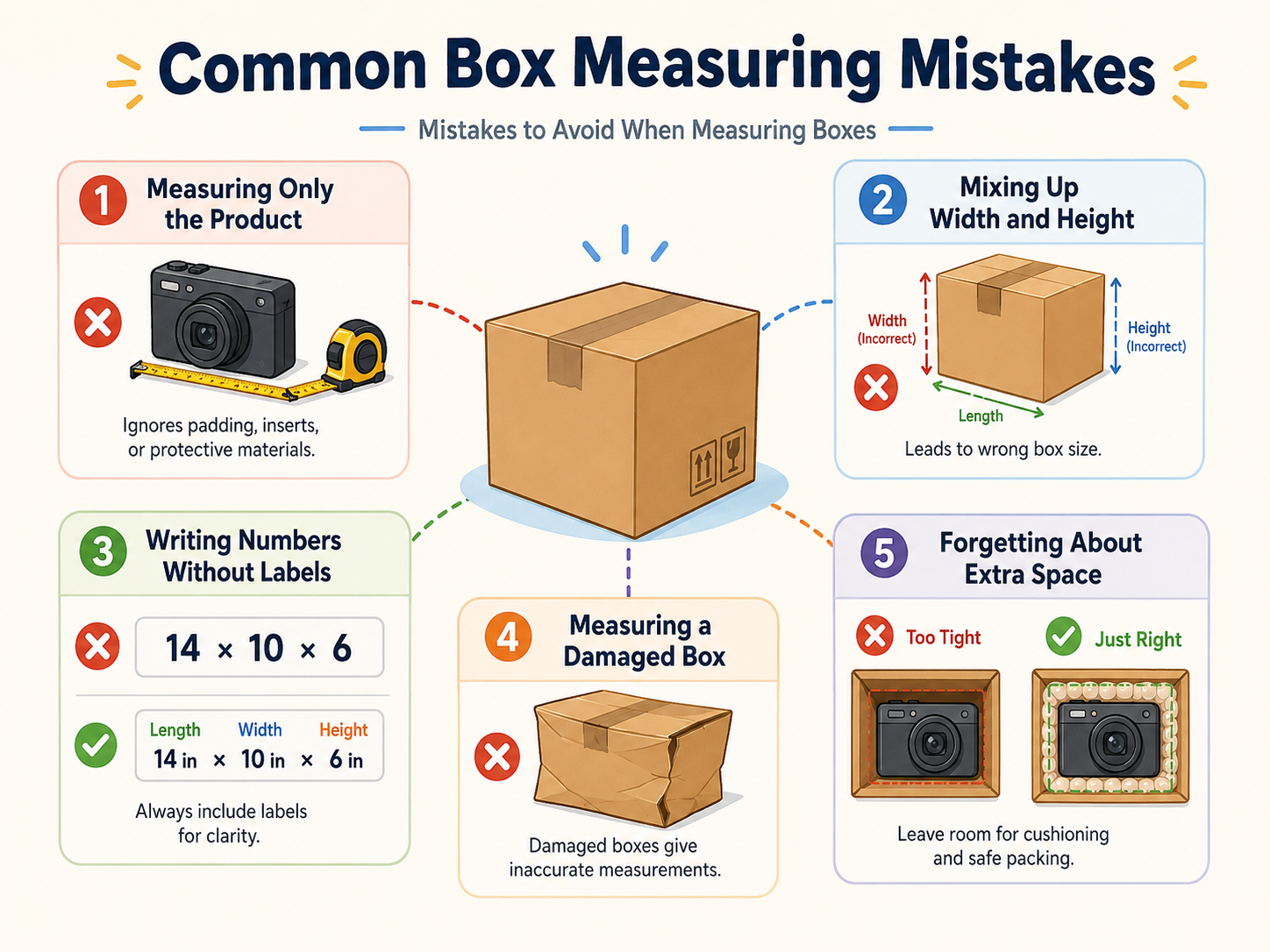
Measuring a box is straightforward, but small errors can result in an incorrect box size.
Here are some mistakes to avoid.
Measuring Only the Product
Measuring the product is important. It is not always enough. You also need to think about how the product will sit inside the box. If you need paper foam dividers or inserts then the box must have space for them too.
Mixing Up Width and Height
This is a common mistake.
Remember this:
Width goes across the base.
Height goes from bottom to top.
Switching these numbers can change the whole box shape.
Writing Numbers Without Labels
Three numbers alone can confuse the supplier. For example 14 × 10 × 6 may be clear to you. It may not be clear to someone else.
Label the size like this:
Length: 14 inches
Width: 10 inches
Height: 6 inches
Measuring a Damaged Box
Do not measure a crushed bent or open box. Use a clean box that is properly closed. This gives you a better measurement.
Forgetting About Extra Space
The product should not move too much inside the box. At the same time the box should not be too tight. Leave enough room for safe packing. Do not waste space.
How Much Extra Space Should You Leave Inside the Box?
A box should not be too tight or too loose. Products need enough space for protection while staying secure during shipping. The amount of extra space depends on the type of product.
Fragile Products
Glass jars, candles electronics and ceramic products usually need extra room for protective materials.
You may need
- Foam inserts
- Bubble wrap
- Paper cushioning
- Cardboard dividers
These materials help absorb impact during shipping.
Luxury Products
Luxury packaging should fit the product closely.
A snug fit keeps the product from moving while giving customers a premium unboxing experience.
Many luxury boxes use custom inserts to hold the product in place without adding too much empty space.
Food Packaging
Food boxes often need enough room for the product to fit comfortably without being crushed.
Some products also need space for liners trays or protective wrapping.
Choosing the right amount of extra space helps protect your product without making the box larger than necessary.
Box Dimensions by Packaging Type
Different packaging styles need different dimension planning. The right measurements help protect the product and improve how the package looks.
Mailer and Shipping Boxes
Mailer and shipping boxes should leave enough room for the product and protective materials without creating excessive empty space. Gift and jewelry boxes usually require a closer fit to keep the product secure and improve its presentation.
Rigid Boxes
Rigid boxes are often used for luxury products. Their thick walls reduce the inside space so internal measurements are very important. A small mistake can make the product fit poorly. Kraft and Cardboard Boxes should have enough room for the product and protective material.
Sleeve, Tuck End, and Display Boxes
These boxes should match the product’s shape and position. Correct dimensions help the box close properly and create a better presentation on store shelves.
Final Measurement Checklist Before Ordering Custom Boxes
Before placing your order check these details carefully.
- Measure the product length width and height.
- Check the product weight.
- Decide if you need internal or external dimensions.
- Leave enough space for inserts foam or protective fillers.
- Confirm the box style and material.
- Use the same measurement unit throughout.
Taking a few extra minutes to check your measurements can help prevent costly mistakes later.
Once the measurements are confirmed, a tool such as Pacdora can turn them into a packaging dieline and 3D mockup before production begins.
Frequently Asked Questions
1. What order are box dimensions written in?
Box dimensions are normally written as Length × Width × Height (L × W × H). Length is the longest side of the base, width is the shorter side, and height is measured from the bottom to the top.
2. How do you measure the length, width and height of a box?
Place the box on a flat surface. Measure the longest side of the base for length, the shorter side for width, and the vertical distance from the bottom to the top for height.
3. How do you measure a rectangular box?
Close the box and place it in its normal position. Measure the longest base side first, the shorter base side second, and the vertical side last. Record the measurements as Length × Width × Height.
4. How do you find the height of a box?
Measure vertically from the bottom surface of the box to its highest point. Keep the ruler or measuring tape straight to ensure an accurate measurement.
5. Should box measurements be internal or external?
Use internal dimensions when measuring the usable space available for a product. Use external dimensions for shipping, storage, and pallet planning. Always confirm which measurements your packaging supplier requires.
6. How do you calculate the volume of a box?
Multiply the box’s length by its width and height:
Volume = Length × Width × Height
For example, a box measuring 12 × 8 × 4 inches has a volume of 384 cubic inches.
Conclusion
Understanding the correct Length × Width × Height order helps ensure accurate production, proper product fit, efficient storage, and lower shipping costs. Measure carefully, label each dimension clearly, and confirm whether your supplier requires internal or external measurements before ordering custom boxes.