What Is Kraft Paper? Types, Uses and Packaging Benefits
Kraft paper is made from wood pulp. The word kraft means strength in German and Swedish. The material earns that name. Same weight as regular paper but noticeably tougher through production and transit.
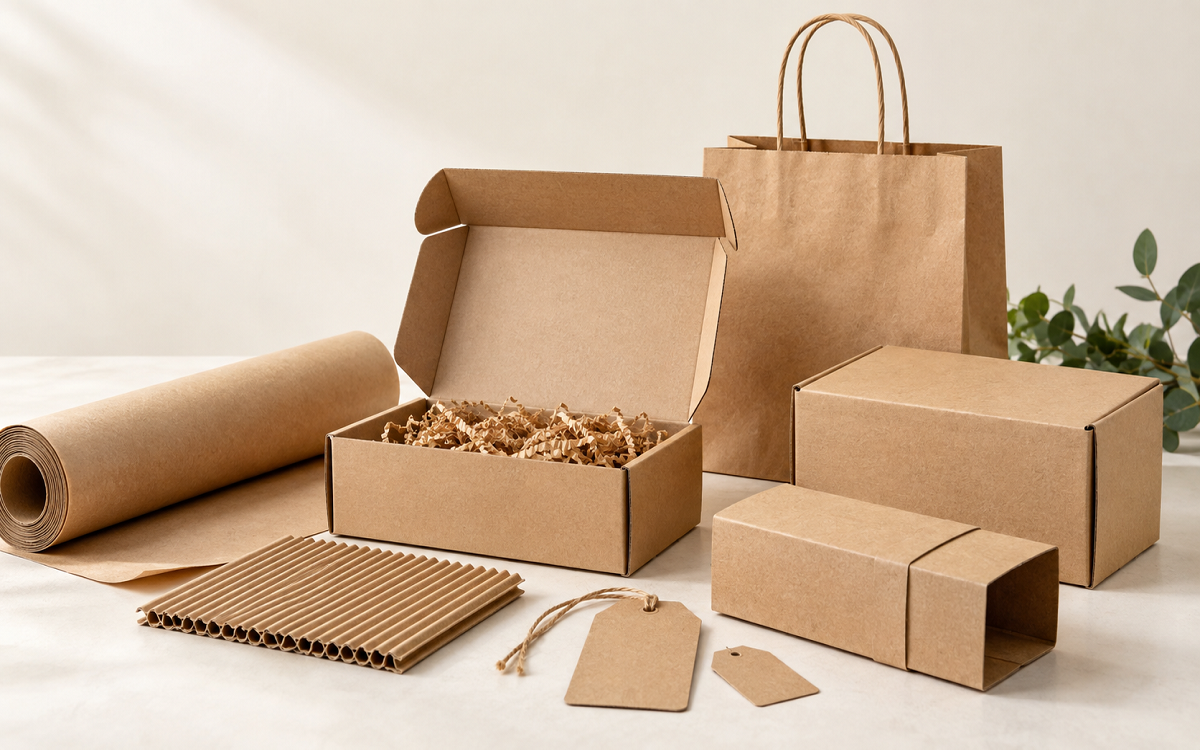
It shows up in kraft paper packaging, food bags, corrugated boxes, wrapping and inserts. Natural brown, white and recycled variants all available.
What Is Kraft Paper?
Wood pulp gets chemically treated to strip out lignin. Long cellulose fibers stay behind. They bond tightly and produce something stronger than regular paper.
The natural kraft color comes from unbleached pulp. Bleach the pulp and you get white kraft. Same strength. Cleaner surface for printing.
Kraft paper and craft paper are not the same thing. Kraft is a manufacturing process. Craft paper is an arts and crafts material. Completely different.
Manufacturing Kraft Paper
Logs get chipped and screened. The chips cook in a chemical solution that breaks lignin down and separates it from the cellulose. The lignin gets burned for energy. The cellulose gets washed, pressed into sheets, dried and rolled into the material that becomes kraft packaging.
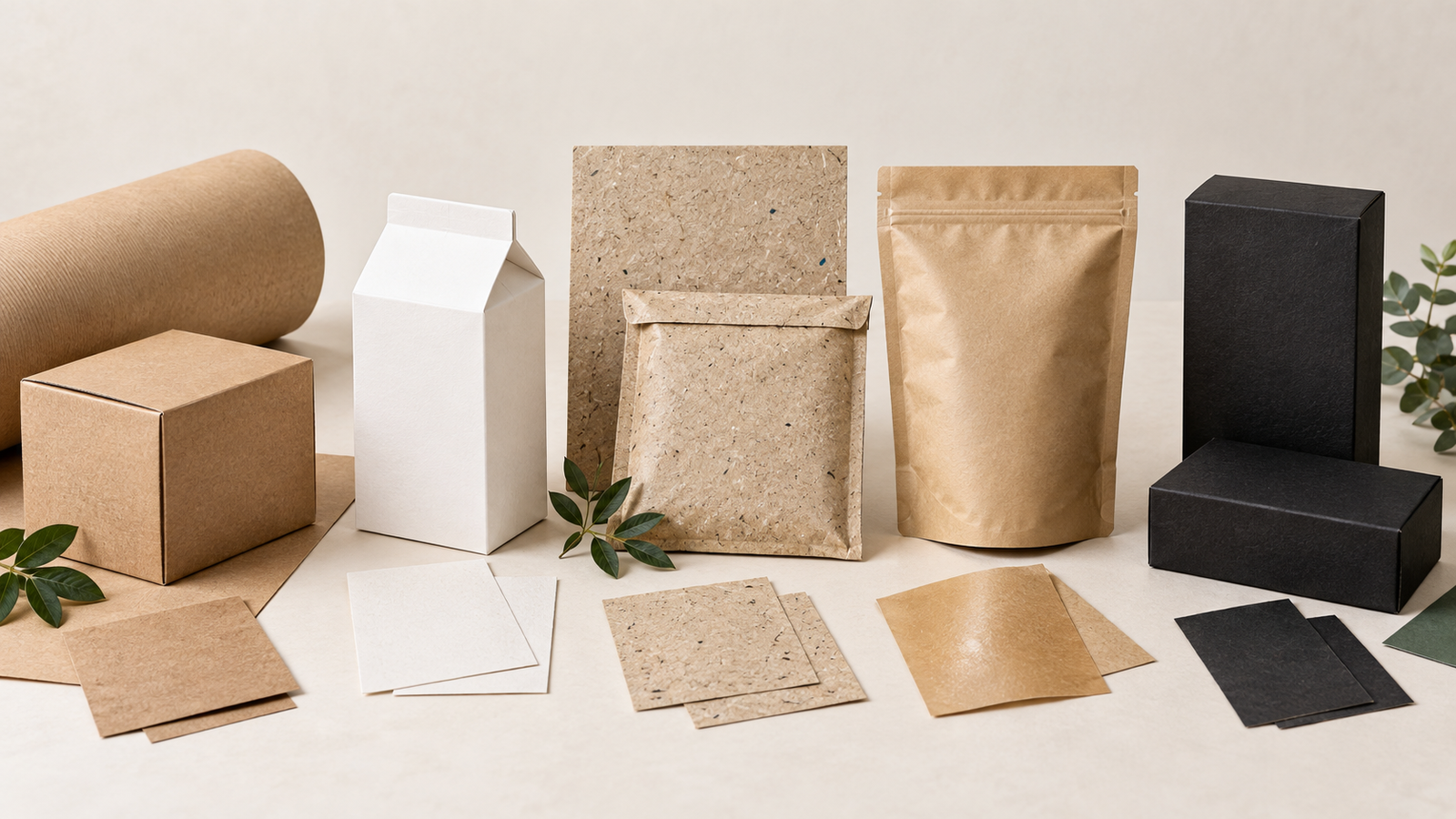
Main Types of Kraft Paper
| Type | Appearance | Key Benefit | Best For |
| Natural or unbleached kraft | Brown | Strongest fibre structure | Shipping boxes, bags, wrapping |
| Bleached or white kraft | White | Sharp print surface | Retail boxes, cosmetic packaging |
| Recycled kraft | Brown or off white | Lower virgin fibre content | Eco focused brands |
| Coated kraft | Glossy or matte surface | Moisture and grease resistance | Food packaging, labels |
| colored or black kraft | Dyed finish | Strong visual identity | Premium gifting, dark brand identities |
Natural brown kraft is the most widely used. White kraft suits brands that need clean print results. Recycled kraft reduces virgin material use. Coated variants handle food and moisture exposure. Black kraft is printed or dyed and works for minimalist or premium brand aesthetics.
Benefits and Uses of Kraft Paper Packaging
Why Brands Use It
Strong and tear resistant — Long cellulose fibres give kraft paper a tensile strength standard paper does not have. It holds its structure under weight and through transit.
Lightweight and flexible — Despite its strength it adds minimal weight to the package which keeps shipping costs lower.
Suitable for custom printing — Suitable for custom printing — Logos, artwork and brand colors can be applied across the full surface. White kraft takes color printing cleanly. The natural kraft color of unbleached brown board works well with white ink and foil stamping, and suits brands that want the material itself to do the visual work.
Natural minimalist appearance — The unbleached brown surface communicates sustainability and restraint without needing a finish to do it.
Available across packaging requirements — From lightweight wrapping to heavy corrugated shipping structures, kraft material scales across different protection and presentation needs.
Common Uses
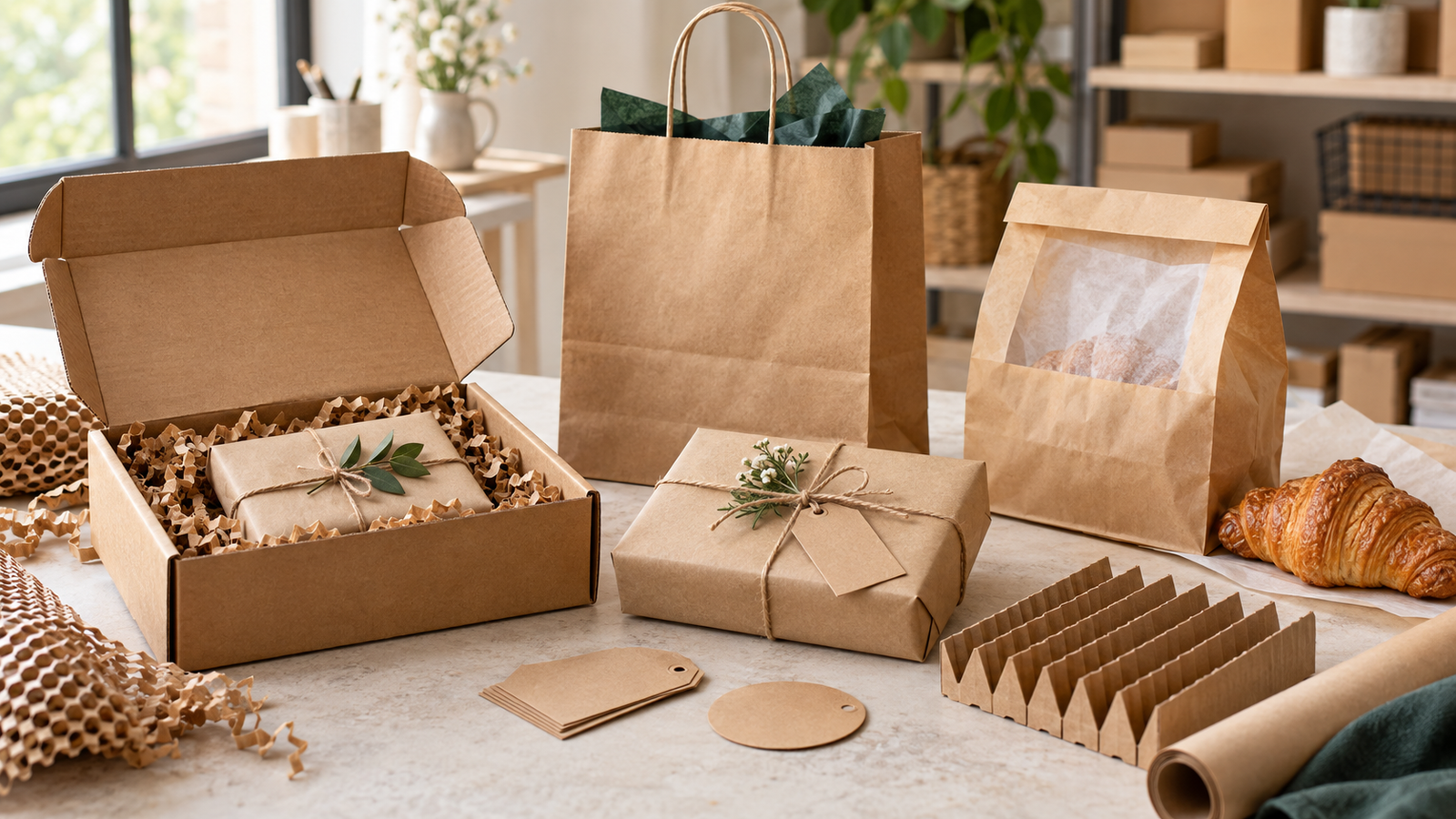
- Custom kraft boxes for retail, gifting and subscription brands
- Corrugated shipping boxes for e commerce and direct to door delivery
- Tuck boxes for supplements, cosmetics and small retail products
- Mailer boxes for subscription and e commerce brands
- Food bags and burger boxes for food service and takeaway
- Product wrapping, inserts, sleeves, labels and tags
- Shredded kraft paper for packaging as void fill and protective wrapping inside boxes, commonly used in gift sets and subscription orders to keep products in place during transit
Is Kraft Paper Eco Friendly?
Kraft paper comes from a renewable wood-based source. Uncoated unbleached kraft is biodegradable and recyclable. FSC certified and recycled kraft options take it further.
But brown packaging is not automatically sustainable. A few things change that:
- Plastic coatings and wax liners make kraft non-recyclable
- Foil lamination at high coverage can cause issues depending on the facility
- Grease, oil or food residue typically disqualifies it from paper recycling
- Adhesives on labels and tape can affect the pulping process
The material is solid. What gets applied to it determines whether it stays that way. For brands that need a clean end-of-life position, uncoated FSC certified kraft packaging with no barrier coating is the right specification.
How to Choose the Right Kraft Paper
The right type depends on what the product needs and how the packaging will be used.
Product weight and fragility — Heavier or fragile products need thicker board or corrugated kraft structures. Lightweight items can use standard folding carton kraft grades.
Shipping conditions — Packages moving through courier networks need more structural support than products handed over at a retail counter.
Moisture and grease exposure — Food packaging that contacts oil or moisture needs a coated or lined kraft. Uncoated kraft absorbs both.
Food contact requirements — Not all kraft paper is food safe. Confirm food grade certification before specifying for direct food contact.
Printing and brand requirements — White kraft takes full color print cleanly. Natural brown kraft suits white ink, foil and minimal design. Heavy color coverage on brown board will read differently than it does on white.
Strength and thickness — Specify the gsm (grams per square metre) based on the product weight and how the box will be handled. Lighter stocks suit inserts and wrapping. Heavier stocks suit structural packaging.
Coatings and recyclability — If end of life recyclability matters to the brand, avoid barrier coatings, wax and lamination where possible.
Can Kraft Paper Be Printed and Customised?
Yes. Kraft paper packaging is fully customisable across print and finish options.
Logo and artwork printing — Offset and digital printing both work on kraft. White ink is commonly used on natural brown kraft to maintain contrast. Full color printing works better on white kraft where the base does not affect color accuracy.
Foil stamping — Gold and silver foil sit particularly well on natural brown kraft, adding a premium finish without needing a full color print behind it. See how foil stamping compares to other finishing techniques in the emboss vs deboss guide.
Embossing and debossing — Both work on heavier kraft board stocks and add tactile dimension to logos and brand marks.
Die cut windows — Window cutouts can be added to let the product show through, common on tulip boxes and retail cartons.
Custom sizes and inserts — Kraft packaging is built to the product dimensions. Inserts, dividers and sleeves in kraft material keep products in place and add a layer of presentation on opening.
For rigid packaging with a kraft aesthetic, rigid boxes and magnetic closure boxes are also available with kraft material options.
Is Kraft Paper Right for Your Product?
Kraft paper is a strong, flexible and widely recyclable material that works across a broad range of packaging types. Natural brown kraft suits brands that want packaging with an honest, minimal aesthetic. White kraft suits brands that need clean print results. Recycled and FSC certified options work for brands with sustainability commitments built into their specification.
The correct type depends on what the product needs in terms of protection, the conditions it will travel through, what the print requires and what the brand needs the packaging to say.
Art Impact Packaging builds kraft packaging across all formats from folding cartons to corrugated mailers. Get a free quote and get the right kraft specification built around your product.
FAQs
What is kraft paper made from?
Wood pulp processed through the kraft chemical pulping method. Lignin is removed leaving long cellulose fibres that bond tightly and produce a strong durable paper.
What is kraft paper used for?
Kraft packaging boxes, corrugated shipping boxes, food bags, product wrapping, mailer boxes, labels, inserts and sleeves across retail, food service and e-commerce.
Is kraft paper recyclable and biodegradable?
Uncoated clean kraft paper is recyclable through standard paper streams and biodegradable. Coatings, wax, foil lamination and food contamination affect whether it can be recycled at end of life.
Is kraft paper waterproof?
Standard uncoated kraft is not waterproof. It absorbs moisture. Coated or wax lined kraft variants offer water and grease resistance for food and liquid adjacent applications.
Can you print on kraft paper?
Yes. White ink and foil work well on natural brown kraft. Full color printing performs better on white kraft where the base does not affect color accuracy.
Is kraft paper safe for food packaging?
Food grade certified kraft paper is safe for indirect and in some cases direct food contact. Not all kraft paper carries food grade certification. Confirm with the supplier before specifying for food use.